
Introduction
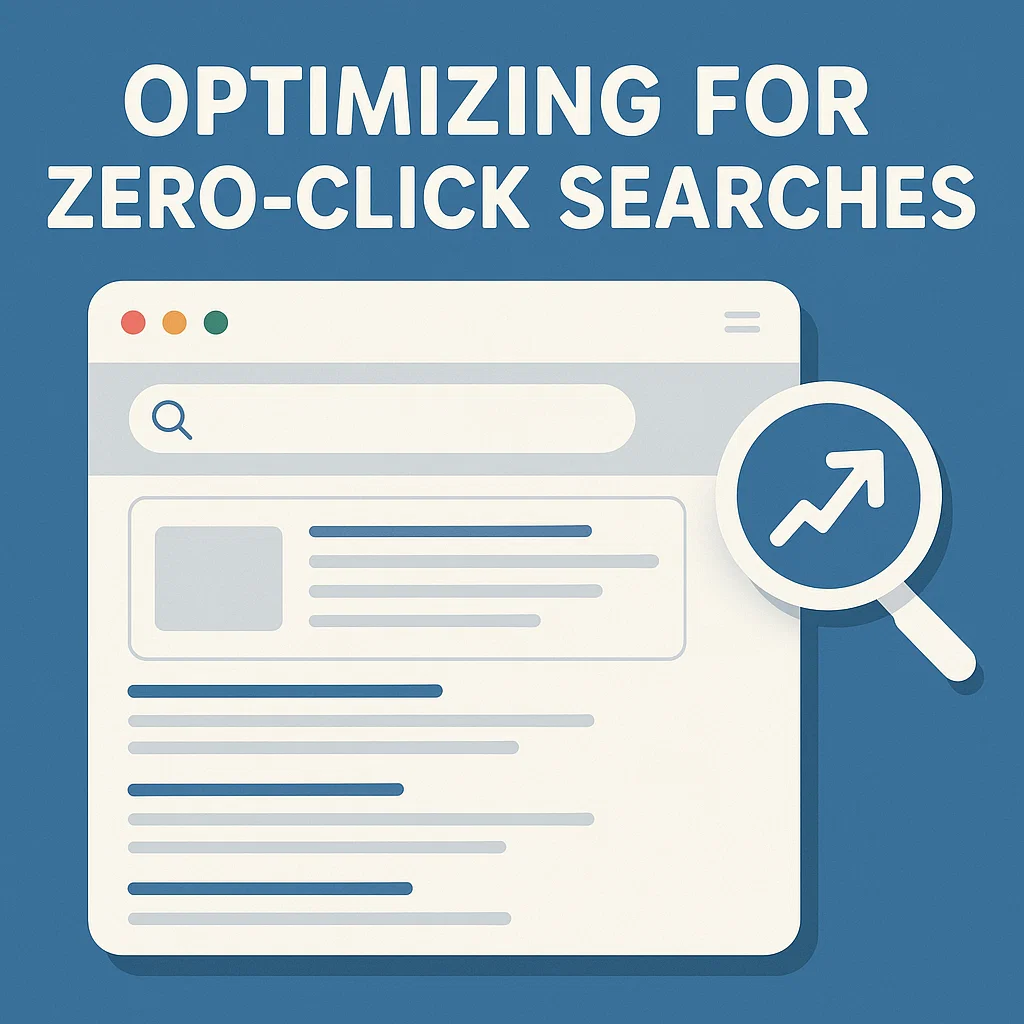
Search engine optimization is usually meant securing clicks and traffic, but this isn’t necessarily the trend anymore. More than ever, businesses will face an onslaught of zero-click searches, wherein their answers are displayed directly on Google’s results page without needing to click through to a website. This will increase in 2025.
As if it were not enough, this trend, which is driven by Google’s AI Overviews (AIO), featured snippets, local packs, and knowledge panels, has left many marketers and content creators wondering how they will remain visible to non-click users. The answer, however, lies in an understanding of zero-click-search behavior and optimization of content to accommodate that.
What Are Zero-Click Searches?
A zero-click search happens when Google answers a user’s request within the Search Engine Results Page (SERP). This may come in the form of:
AI Overviews (just introduced in 2024 and 2025)
Featured Snippets
Knowledge Panels
Calculators, weather widgets, and converters
Maps and listings of local businesses
In such situations, intent is fulfilled right on the webpage, thus often rendering the actual visit to the webpage unnecessary for further information.
Though that may sound like an opportunity for loss, it does open new avenues for brand visibility, authority building, and top-of-funnel engagement, if managed well.
Why Are More Zero-Click Searches Being Conducted?
Here are a few possible reasons for this paradigm shift:
User experience: The quicker users can find credible answers, the better their experience will be.
Expand of voice and mobile search because they require speeds fast concise answers.
AI-based search-enhancing features: AIO summarizes without outhing at links.
This is not temporary; these changes will stay fundamental as users find and consume information.
Optimizing for Zero-Click Searches
Here’s how you can continue to win visibility and authority in a no-click universe.
1. Target Featured Snippets (Position Zero)
Featured snippets are Google’s chosen summary of an answer to a query placed above the general search results. To get featured:
Speak the answers as questions in your content.
Position the questions with H2 or H3 headings.
Follow with a concise, 40-60 word-long answer.
Use lists, tables, or short paragraphs as necessary.
Even if the user did not click, the brand name and URL will be visible, thus raising awareness and credibility.
2. Structure Content to AI Summarize and AIO
With AI Overviews, Google pulls structured insights across multiple sources. In this regard, you must:
Use clear and authoritative voice.
Integrate expert quotations, real-world examples, and factual support.
Ensure clean and scannable formatting-short paragraphs, bullet points, and subheadings.
This improves the chances that your site’s content would be featured in an AI summary, though subtle, these are growth over time of your authority in the niche.
3. Employ Schema Markup
Structured data helps a search engine broadly understand what your content means in the context of understanding. The right schema may then make your content eligible for:
FAQ
how-tos
Reviews
Events
Local business info
Label your content accurately with schema to improve your chance for getting more benefits from enhanced SERPs.
4. Build Strong Brand Presence
Zero-click searches allude to instant answers, but upon closer search, users tend to turn towards names they are familiar with.
Your brand should therefore stand out in every place it appears:
Use uniform author bios and headshots.
Consistency in voice and tone across channels.
Link to reputable sources and have Backlinks from them.
Even without a click, you could still build brand trust and become the go-to name in your field.
5. Create FAQ Content for Search Intent
Most zero-click searches involve question-based queries. Anticipate users’ questions and answer them in an FAQ format.
What is the best time to plant tomatoes?
“How to reset a router?”
“Signs of a termite infestation?”
Brief, helpful explanations in a Q&A layout can answer these. Bonus: This also supports voice search optimization.
6. Optimize for Local Packs
If you are a local business, zero-click is no deprivation but pure potential. The local pack is the contact info, reviews, directions, and even services, all without going to the website.
In order to appear here:
Claim and improve your Google Business Profile.
Gather authentic customer reviews.
Ensure NAP (Name, Address, Phone) consistency across listings.
Include business categories and hours.
You’ll get real-world engagement even if the user never clicks through.
Are Zero-Click Searches Bad for Business?
Not absolutely; traditionally, though web traffic may decrease due to zero-click searches, some benefits may include:
Better-qualified leads (if they click, they mean business)
Another avenue to brand visibility
Positioning yourself as an expert in your niche
Interaction across many platforms: YouTube, Google Maps, reviews etc.
The trick is to think beyond the click and build value in the moments before users even decide to click through.
Get Other Sources Beyond Google
Google may be the most helpful in this regard, but it is not the only place where people discover the content in 2025. Consider sending your content to:
YouTube (which also appears in Google results)
Podcasts and audio answers for voice search
Email newsletters (zero-algorithm and direct reach)
Social platforms: Instagram, TikTok, and LinkedIn
AI tools like ChatGPT, Perplexity, and Copilot summarize web content
This multi-channel approach balances the visibility lost in zero-click searches.
Final Thoughts
Zero-click searches do not surpass SEO; they redefine it. To survive in that environment, brands learn to adapt with such measures:
Clear answers, both in text and structure, as well as; User-first content. Authority-building content that lets the audience eventually realize the weight of your content as it achieves a position in AI summaries or featured snippets. Thus, you won’t have any worries about being invisible; you will already be at the top.


 English
 Arabic